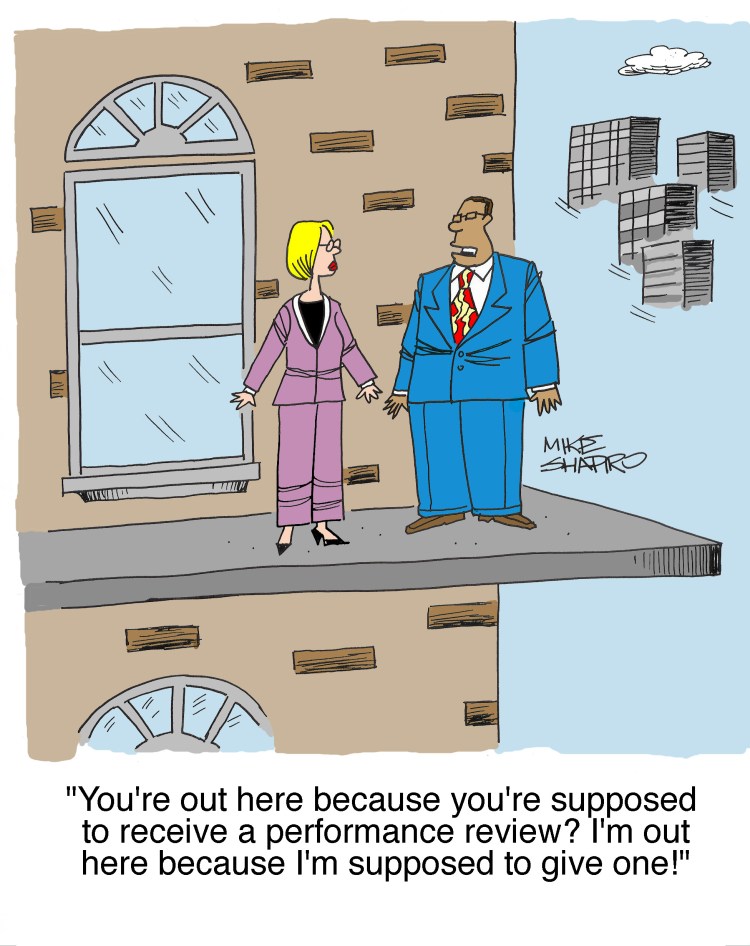
CONSIDERATIONS FOR MANAGERS AND EMPLOYEES:
MANAGER:
1. After completing a review for your staff member, take some time and read over the scores and your comments pretending that this is your review from your manager. Would you like the scores? Would you like the comments? Would you think the review was fair?
2. Don’t give someone a bad score in a category if you have never discussed these issues with them since the last review. Inuendos don’t count, you should have had an open and honest discussion with them. If you have not had the courage and responsibility as a manager to discuss it with them prior to the review, then it is unfair to give them a low score now (you wouldn’t want someone to treat you that way, would you?). Staff members cannot fix or improve things they don’t know about.
3. Remember, a review is not designed to “beat down” an employee, it is a time to encourage them and accentuate their positives. If there are issues you have discussed with them but there has been no improvement, then you need to highlight and discuss the issues during the review. But, do not discuss it with an attitude of, “I have told you over and over again!”, but have an attidued of, “Why are you struggling in this area and what can we do together to improve it?” You need to be sure the employee knows that you genuinely want to help them improve. Isn’t that what you want of your own manager?
4. Be sure to notice and compliment your staff member for going the extra mile. Don’t include their extra efforts as part of your expectations. Acknowledge that their efforts are appreciated. Remember what your manager expected of you before you became a manager and how your extra efforts were recognized.
5. If your manager has been harsh or unfair in your review, don’t take it out on one of your staff members. Your job is to be an encourager who inspires them to improve, and not a discouager who negatively affects their performance. When you help them to be successful, it improves your success as a manager.
6. Be an effective communicator throughout the year and not just during the review process. This will make it much easier to discuss issues in the review because you already have a “feel” of how the staff member reacts to the things you say.
7. Even in categories where the employee is under-performing, find some positives to mention along with discussing the need for improvement. This helps to balance the review and will prevent the employee from believing they are a total failure.
EMPLOYEE:
1. If you are frustrated with upper management, don’t take it out on your immediate manager because there are not enough questions in the survey regarding upper management.
2. If you have not openly discussed issues you have had with your manager, don’t use your review of him or her as an opportunity to ‘throw stones’. Ususally, manager surveys (aka reviews) from staff members are anonymous so don’t take the cowardly approach and score your manager low, if you have not had the courage to discuss issues with him or her prior to the review.
3. Remember, most managers have a desire for their staff to be effective and successful. Some managers may have a struggle expressing this desire in an appropriate manner, but they still have it. When the staff is successful, the entire group looks good to upper management. It really is a team effort.
4. There are some requirements that are handed down to managers to commuicate to their staff. Your manager may not agree with the information, but they have a responsibility to comply with their upper management. Your manager has a lot of demands from those above him and they are often not in a position to discuss these with the staff. Just as the manager needs to be considerate and support you, you also need to be considerate and support him or her.
5. Throughout the year, think of some extra things you can do, then do them without being asked my your manager. Even if your manager fails to say something to you about your extra efforts, it doesn’t mean they haven’t noticed them (some managers are just not very good communicators). These efforts can be topics for discussion during your review.

 BREAD FOR BELIEVERS
Discussion
No comments yet.